The intersection between design and science are practically infinite. This is part of the reason I’ve never seen from Nanotechnology Engineering to Graphic Design that big of a leap, or strange of a conclusion. In the future I don’t think the two will be considered so separately.
Tag Archives: innovation
http://www.youtube.com/watch?v=JOl4vwhwkW8
“In the Sitio Maligaya region of the Phillipines, the homes are often covered with fluted or corrugated sheet metal for roofs. Which means, their homes are pretty dark. While many have electricity, many do not, and those that do don’t want to use it to power light bulbs to light their homes.
So, the clever “Solar Demi” created a way to bring light into their homes with something that’s essential free: empty plastic drink bottles. The results are amazing, and cost very little to build, and nothing to maintain.”
Check out the rest of the article.
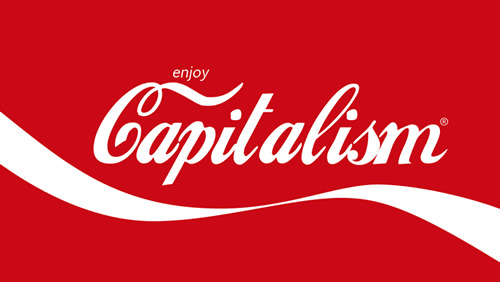
Hey! Let’s Redefine Capitalism, Part 1
Hello my name is Hank Green and I am a capitalist. I didn’t start out this way. I come from pretty radical stock (if you call my college-self my stock, which you really shouldn’t.) I used to believe that money was the root of evil. I was wrong about that.I still hold many socialist values close to my heart. For example, I believe in sharing and cooperation and schools. I believe that advertising is dangerous and bad for the free market. And I also believe that the amorality of corporations could potentially destroy all of the good things in the world.
But nonetheless, I am a capitalist. Money lets value define itself. It creates a market where good products rise to the top and crappy ones disappear. It has allowed for much more rapid mutation of our culture and technology, sometimes too rapid, but other times only just fast enough.
The desire for money (and the freedom that comes with it) pushes people to work hard to create products and services that other people will enjoy. And it’s all self-controlling, with very little need for external inputs.
But there are also things I hate about money. I hate how you need money to make money. I hate how rich people become socially isolated from poor people, and thus become convinced that it’s not extraordinarily immoral to buy a yacht when there are people dying of diarrhea.
I hate how rich people help rich people who help rich people, and no one gets to have any say beyond that. I hate that the average college student’s parent’s income is three times higher than the average drop-out’s parent’s income.
I hate how corporations excitedly make themselves slaves to unfeeling stock holders who have no interest in thinking beyond the bottom line. I hate how corporations have many rights but no conscience. I love the people that work at these companies, but I hate that they are encouraged to drive for efficiency and profit at the expense of everything else including innovation, creativity, and community.
And I hate how wealth and power concentrates itself. So that the average person has no opportunity to be involved in this remarkable system beyond abstract mutual funds, CDs, and stock portfolios. Not only does the average person have no path to collect real wealth, they also do not have any say in how these corporations, arguably the most important force in our world, treat their world.
That’s the thing that I want to change. Continued tomorrow.
Sleep for Success: Creativity and the Neuroscience of Slumberi
For years, scientists thought that the function of sleep was merely to rest the body and mind, but recent research suggests that sleep is essential for both learning and creativity. It’s no surprise that people who are well rested learn better and are more creative. What is new is the value of sleeping after learning something or during a break in trying to solve a problem. Studies have looked at the benefits of taking naps as well as sleeping through the night.
During sleep, rat’s brains (and yours) practice what they’re recently learned.
Researchers have discovered that your brain becomes very active when you sleep, and that during certain phases of sleep, your brain becomes even more active if you’ve just learned something new. In an early study that identified this process, rats were hooked up to measure the electrical activity of their brains while they learned a maze. Later, while the rats were sleeping, the researchers observed that their brains were emitting the same pattern of activity they had emitted during maze learning. Apparently, the rats’ brains were “re-running” the maze in their sleep and using this time to consolidate their memories of what they had learned. These rats performed better on the maze the next day than rats that were prevented from re-running the maze during sleep.
This same phenomenon has been observed in human learning. In other words, if you learn something and then sleep on it, what you’ve learned becomes clearer just as a function of sleeping. But what’s even more interesting is that sleeping on a problem helps people find better solutions. In a study titled “Sleep Inspires Insight,” participants were given puzzles that involved finding the final number to complete a series of digits. The way they were trained to solve the puzzle was to compare every two-digit pair in the series. What they were not told was that there was a shortcut that allowed people to identify the solution after only two steps. Participants performed three trials of the puzzle and then were given an eight-hour break before returning for ten more trials. Some of them slept during the break and some did not. The people who slept between the two sessions were twice as likely as the others to discover the easier way to solve the problem. According to the researchers, sleeping on a problem apparently allows for a restructuring of the brain connections, “setting the stage for the emergence of insight.”
Well, then I’d better go sleep now. The milk should be taking its effect any minute now. I hope.
We looked into this a little in both psychology 11 and psychology 12, but this is an especially interesting study.
